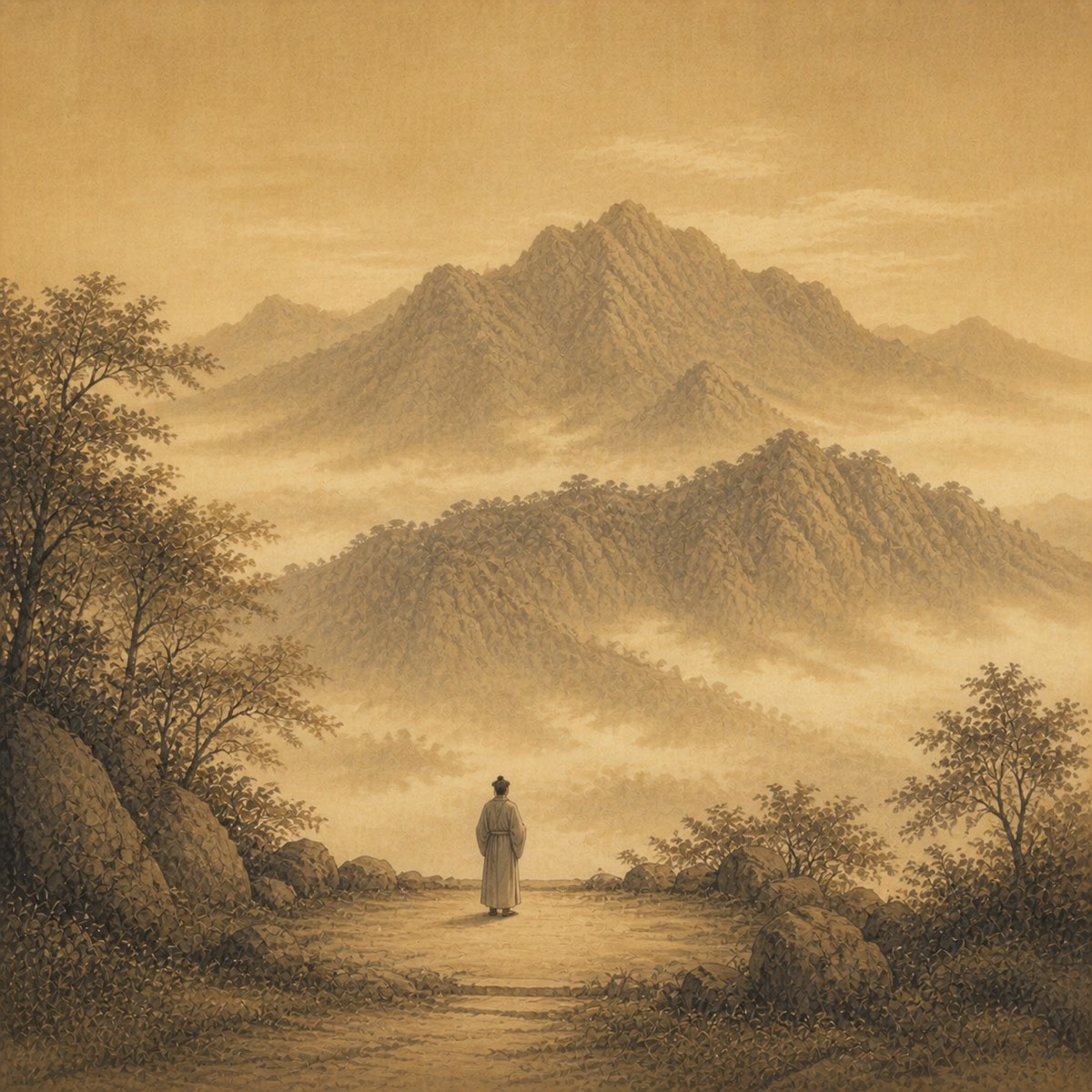
A lone figure stops before layered mountains — visual meditation on Hexagram 52, Keeping Still.
Hexagram 52 · Keeping Still · 艮为山

Gèn

Keeping Still

Hexagram 52, Keeping Still (艮卦, Gèn), appears when the wise movement is to stop at the proper boundary. Mountain over mountain creates stillness, but not permanent inactivity. The classical tradition says to stop when it is time to stop and act when it is time to act. Withdraw attention from restless impulses, remain within what is actually yours to address, and let the next movement wait until it has a clear place and purpose.

The Essence

What does Hexagram 52 mean?

Hexagram 52 is called Gèn (艮) in Chinese, meaning keeping still, stopping, or mountain. In the I Ching, it is formed by the mountain trigram repeated above and below. A mountain marks a limit: movement reaches it and does not continue merely from momentum.

The Judgment describes keeping the back still, no longer grasping the self, and walking through the courtyard without seeing its people. This does not require literal isolation or indifference. The back is the part of the body that does not chase what the eyes desire. Attention is no longer pulled outward by every object, reaction, or social demand.

Keeping Still often appears when:

  • continued effort has become agitation rather than progress,
  • a conflict needs a pause before another word is added,
  • the mind is traveling beyond the responsibility actually in front of it,
  • or a boundary must hold long enough for clarity to return.

The traditional commentary adds an essential qualification: stopping is correct only in its proper time and place. Gèn is not a command to freeze life. It asks whether you can end the movement that has reached its limit without resisting the movement that will later become necessary.

The core meaning of Keeping Still

At its core, Hexagram 52 describes stopping in the right place. Stillness is not an achievement detached from circumstance. It is the capacity to notice when thought, speech, emotion, or action has gone as far as it can usefully go.

The Image says that two mountains stand together, and the noble person's thoughts do not go beyond the present position. This is not a ban on imagination. It is an instruction to stop carrying responsibilities, forecasts, and arguments that do not belong to the moment.

Sound stillness creates a boundary around attention. Feel the body. Name what is yours to do and what is not. Let unfinished noise remain unfinished. When the proper time for action returns, stillness should release it. A mountain is stable, but it is not hostile to the paths, weather, and life that move around it.
A Note on Reception

What it feels like to receive Hexagram 52

Receiving Hexagram 52 can feel like being asked to stop when every part of you wants one more message, one more explanation, or one more attempt to force resolution. The outer situation may be quiet while the mind continues running through imagined conversations and outcomes.

The hexagram brings stillness into the body line by line: toes, calves, waist, trunk, jaw, and finally a mature, generous rest. This progression shows that stopping is not always immediate or comfortable. One part may halt while another still strains forward. Forced rigidity can create its own danger.

Keeping Still does not ask you to erase desire or become unreachable. It asks for a pause with enough integrity that reaction can end. You may discover that nothing more is required today. You may also discover, after the noise subsides, the exact action that remains. The test is not how motionless you appear, but whether movement and rest each occur in their proper place.

Contextual Interpretations

Hexagram 52 in different areas of life

Love & Relationships

In love, Hexagram 52 often advises stopping the cycle of pursuit, argument, or repeated reassurance. A conversation may have reached the point where more words only harden each position. In a love reading, a genuine pause can protect the bond and reveal what the emotional momentum has been hiding.

Stillness is not silent punishment. State the boundary clearly when possible: what is being paused, why, and when the conversation can be revisited. If you disappear to control the other person's behavior, the outer quiet still contains an active struggle.

The hexagram can also describe the need to stop chasing a connection that does not reciprocate. Notice whether the relationship becomes clearer when you cease carrying both sides. At the same time, do not use Gèn to avoid a necessary truth forever. Stop when it is time to stop; speak or act when the proper moment arrives. A healthy boundary makes later contact more honest rather than keeping another person indefinitely outside the gate.

Career & Work

In career, Hexagram 52 favors a deliberate pause, a firm scope boundary, or concentrated work without unnecessary movement. In a career reading, the useful question is not simply whether to stop working, but which activity has reached its limit.

Pause a project that lacks a decision, or protect time from meetings and messages that scatter attention. The Image's instruction not to think beyond one's position can be especially helpful when you are carrying decisions that belong to another role or worrying about outcomes you cannot control.

Keeping Still can support saying no, delaying a launch, or holding a policy steady while evidence develops. It can also warn against paralysis disguised as thoroughness. Set a condition for renewed movement: a date, missing fact, approval, or defined threshold. The point of the boundary is to preserve clear action, not to avoid responsibility.

Money & Resources

Financially, Hexagram 52 advises stopping reactive movement and holding a clear boundary around resources. This may mean pausing purchases, delaying a commitment, or refusing to make another adjustment simply because uncertainty feels uncomfortable.

In a money reading, return to the position you actually occupy: current cash, obligations, time horizon, and risk capacity. Do not let another person's urgency or a distant imagined outcome pull you beyond those facts. A temporary freeze can create room to verify terms and recover proportion.

Stillness is not the same as ignoring bills, deadlines, or changing conditions. The traditional commentary joins stopping with timely action. Meet responsibilities that are already due, then stop unnecessary movement around them. If a decision is postponed, name what information or condition will reopen it. Financial restraint is useful when it protects judgment; it becomes avoidance when no future point of review exists.

Is Hexagram 52 a Yes or No?

Hexagram 52 usually leans no or not now for further movement. It favors stopping, waiting, holding a boundary, or allowing a situation to settle before another action is taken.

For questions about pausing, declining, ending a repetitive cycle, or protecting focused attention, it can lean yes. For pushing ahead simply to relieve tension, it leans no. The changing lines show whether movement is stopped early and safely, whether one part still follows another, whether restraint has become painful rigidity, or whether stillness has matured into a stable good.

The Six Moving Stages

The six changing lines

The six changing lines of Hexagram 52 move upward through the body. The first stills the toes before movement begins. The second stills the calves but cannot rescue what they follow, leaving dissatisfaction. The third stops at the waist so rigidly that danger and inner heat arise. The fourth stills the whole trunk without blame. The fifth stills the jaws, bringing speech into order and removing regret. The sixth reaches generous, substantial stillness and good fortune. Together, the lines distinguish an early boundary, frustrated restraint, harmful suppression, embodied composure, measured speech, and a fully established capacity to stop.

01

Stilling the Toes

Bottom line

初六:艮其趾,无咎,利永贞。

Stop before movement begins; sustained steadiness keeps the direction correct.

02

Stilling the Calves

Line 2

六二:艮其腓,不拯其随,其心不快。

One part stops while another still follows, creating frustration and unease.

03

A Rigid Waist

Line 3

九三:艮其限,列其夤,厉薰心。

Forced restraint divides the body and brings danger close to the heart.

04

Stilling the Body

Line 4

六四:艮其身,无咎。

Still your own movement; there is no blame.

05

Stilling the Jaws

Line 5

六五:艮其辅,言有序,悔亡。

Restrain speech until words have order; regret then disappears.

06

Generous Stillness

Top line

上九:敦艮,吉。

A mature and substantial capacity to stop brings good fortune.

Learn more about how changing lines reshape a reading in I Ching Changing Lines.

Reflection

What this asks of you

If you receive Hexagram 52, do not ask only how to become calm. Ask where movement has reached its proper boundary and what must be allowed to stop.

  1. 01 /

    What action, argument, or thought has gone as far as it can usefully go?

  2. 02 /

    Is your stillness containing reaction, or suppressing something that still requires attention?

  3. 03 /

    What clear condition would tell you that the proper time for movement has returned?

Let the mountain mark the limit without turning the limit into a prison. Stop completely enough that the next movement can be clean.

Common Misunderstandings

What Hexagram 52 is not

“Keeping Still means doing nothing.”

No. The traditional commentary explicitly joins stopping at the proper time with acting at the proper time. Gèn ends movement that has reached its limit so that later action is not driven by leftover momentum.

A clean stop belongs to responsive action; it is not a permanent retreat from life.

“Stillness means suppressing emotion.”

The third line warns against exactly that kind of rigid restraint: the body is divided and danger burns close to the heart. Sound stillness contains reaction without denying what is present. It lets feeling settle enough to be understood.

“A boundary is correct because it feels peaceful.”

Not always. Avoidance can feel quiet while leaving the underlying responsibility untouched. The inverse, Hexagram 51, The Arousing, shows that some moments need to disturb the calm and wake action. Keeping Still asks whether stopping fits the time and place, not whether stillness is always more spiritual or comfortable than movement.

Related Patterns

Hexagrams related to Hexagram 52

Frequently Asked Questions

Is Hexagram 52 a good sign?

It can be. Hexagram 52 brings no blame when stillness is applied in the proper place and good fortune when it becomes mature and substantial. Its challenge is timing: stopping is helpful when movement has reached its limit, but harmful when it becomes rigid suppression or indefinite avoidance.

What does Hexagram 52 mean in love?

In love, Hexagram 52 often advises pausing pursuit, argument, or repeated reassurance. Make the pause clear rather than using silence as punishment. The reading can also ask you to stop carrying both sides of an unreciprocated bond, while remaining willing to speak when a necessary conversation becomes timely.

Is Hexagram 52 a yes or no hexagram?

It usually leans no or not now for additional movement. It can be a yes to pausing, declining, ending a repetitive cycle, or holding a sound boundary. The answer changes when the proper time for action returns, so stillness should not become an automatic permanent refusal.

What does Hexagram 52 mean with changing lines?

The changing lines move from stopping the toes to a mature stillness of the whole person. They distinguish early restraint, frustrated following, dangerous rigidity, embodied composure, measured speech, and substantial rest. The moving line shows where the attempt to stop is sound, incomplete, or too forceful.

What is the Chinese name of Hexagram 52?

The Chinese name is Gèn (艮), meaning stopping, keeping still, or mountain. Its full name is 艮为山, mountain doubled. Two mountains together emphasize a boundary that holds and the discipline of ending movement in its proper place.

Is Hexagram 52 about meditation?

It can describe the collected attention associated with meditation, but the classical text is broader. It concerns stopping bodily movement, speech, thought, and action at their proper limits. Meditation may train that capacity; the reading applies it to whatever situation has become restless, excessive, or mis-timed.

See Hexagram 52 in a reading of your own

Cast your own coins, enter the result, and receive a reading of the pattern in front of you — including any changing lines and the resulting hexagram.

Cast a reading →
← Back to all 64 hexagrams