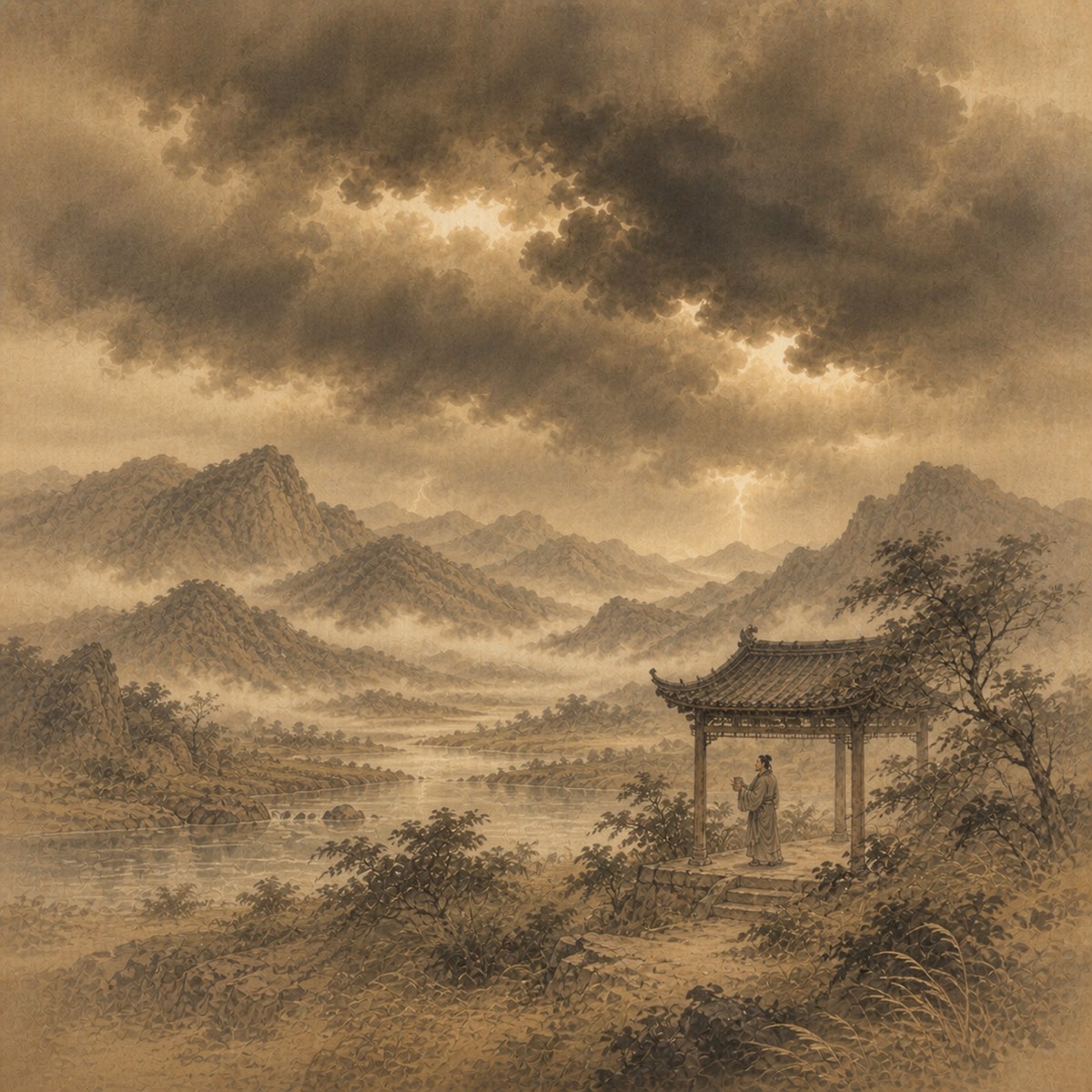
A steady attendant holds a ritual vessel beneath rolling thunder — visual meditation on Hexagram 51, The Arousing.
Hexagram 51 · The Arousing · 震为雷

Zhèn

The Arousing

Hexagram 51, The Arousing (震卦, Zhèn), appears when a shock, surprise, or sudden movement breaks the existing calm. Thunder startles first and demands attention afterward. The reading does not predict disaster; it asks how you respond when certainty disappears. Let the shock wake you up without letting it take command. Attend to what has changed, preserve the responsibility that must not be dropped, and do not let the first alarm decide your conduct.

The Essence

What does Hexagram 51 mean?

Hexagram 51 is called Zhèn (震) in Chinese, meaning thunder, shock, trembling, or arousal. In the I Ching, it is formed by the thunder trigram repeated above and below. One peal follows another: the disturbance is not merely heard but felt through the whole situation.

The Judgment describes alarm at the thunder's arrival, followed by laughter and ordinary speech. The shock travels a hundred miles, yet the ritual spoon and sacrificial wine are not dropped. That final image is the center of the hexagram. Composure does not mean feeling nothing. It means remaining capable of carrying what matters while the body and mind register the disturbance.

The Arousing often appears when:

  • unexpected news changes the atmosphere,
  • a warning exposes something that can no longer be ignored,
  • fear is real but the full consequences are not yet known,
  • or disruption creates the momentum needed to move.

Zhèn separates the first jolt from the response that follows. Startle is involuntary; conduct is not. The reading asks whether fear can become attention, self-examination, and timely action rather than panic, denial, or a story of total ruin.

The core meaning of The Arousing

At its core, Hexagram 51 describes recovering right action after a sudden disturbance. Thunder awakens. It interrupts habit, brings the body to attention, and reveals what remains steady when familiar conditions shake.

The Image says that repeated thunder leads the noble person to fear, reflection, and self-correction. Fear is not praised for its own sake. Its value lies in making examination unavoidable. What did the shock reveal about your preparation, priorities, or conduct? What responsibility still needs to be held?

The ritual vessels in the Judgment represent continuity under pressure. You do not need instant serenity. You need enough presence not to abandon the essential task. After the first reaction settles, check the facts, protect what is entrusted to you, and let the event teach you before you rush either to restore the old order or destroy it completely.
A Note on Reception

What it feels like to receive Hexagram 51

Receiving Hexagram 51 can feel like the moment after a loud crack of thunder, when the body reacts before thought catches up. An announcement, confrontation, mistake, opportunity, or abrupt change may have broken through your assumptions. Even welcome news can be destabilizing when it arrives with force.

The mind often tries to finish the story immediately. It predicts the worst, chases what seems lost, or turns one warning into a verdict on everything. The lines repeatedly distinguish the first shock from what should — or should not — follow it.

The return of laughter in the Judgment does not trivialize the event. It shows proportion returning. You can be shaken without becoming permanently defined by the shaking. The question is whether the disturbance leaves you more awake. Once the noise passes, a clearer standard may remain: what you will protect, what you will correct, and what you no longer have the luxury of pretending not to know.

Contextual Interpretations

Hexagram 51 in different areas of life

Love & Relationships

In love, Hexagram 51 often points to a sudden disclosure, confrontation, or change in the relationship's emotional weather. Something may have been said, discovered, or decided that cannot be unheard. In a love reading, the first task is to distinguish the immediate shock from the deeper condition of the bond.

Do not demand a complete interpretation while both people are still flooded. Pause long enough to establish safety and facts. Then ask what the event actually revealed: a repairable mistake, a pattern that requires a boundary, or a truth that changes the relationship's foundation.

The hexagram does not promise reconciliation or separation. Its standard is steadiness under disturbance. Can each person remain honest without using alarm as a weapon? Can the essential responsibility — care, consent, protection, or truthfulness — remain in hand? If the shock involves abuse, threats, or danger, prioritize outside support and safety. Composure is not the same as staying exposed to harm.

Career & Work

In career, Hexagram 51 describes disruption that demands an alert but disciplined response. A leadership change, urgent failure, unexpected offer, public mistake, reorganization, or sudden deadline may unsettle the plan. In a career reading, do not confuse speed with usefulness.

First identify what must not be dropped: customer safety, critical data, a contractual duty, the team's wellbeing, or the next operational decision. Communicate known facts, name what remains uncertain, and avoid adding noise simply to appear decisive. The Judgment's ritual vessels are a good model for professional composure: the environment shakes, but the entrusted responsibility stays in hand.

Once the immediate issue is contained, examine the warning. Did the disruption expose fragile systems, unclear ownership, or an assumption that was never tested? The Arousing can initiate necessary change, but only if the alarm becomes concrete correction. Repeated alarm without learning eventually becomes a culture of panic rather than readiness.

Money & Resources

Financially, Hexagram 51 warns against decisions made at the peak of surprise or fear. A sudden expense, market movement, income change, or alarming message can create pressure to act before the facts are clear.

In a money reading, protect essentials first: access to cash, account security, required payments, and accurate records. Verify urgent claims through trusted channels, especially before transferring funds or sharing sensitive information. The second line loses valuables during the shock, climbs to safety, and is told not to chase; recovery does not depend on frantic pursuit.

That image is not a promise that every loss will be recovered. It counsels against creating greater danger through frantic pursuit. Separate what requires immediate protection from what can wait for review. When the first alarm passes, reassess the plan with current information. The useful financial response to shock is neither denial nor impulsive liquidation, but preserving capacity while understanding what actually changed.

Is Hexagram 51 a Yes or No?

Hexagram 51 rarely gives a calm, unconditional yes or no. It says that the situation is moving suddenly and your first reaction may not yet be a reliable guide.

For questions about waking up, addressing a warning, or taking a necessary protective step, it can lean yes. For irreversible action driven mainly by panic, it leans no or not yet. The changing lines show whether alarm is followed by recovery, whether loss should be left alone, whether shock prompts useful action, or whether fear has become too scattered for a sound advance.

The Six Moving Stages

The six changing lines

The six changing lines of Hexagram 51 trace different responses to shock. The first is startled, then recovers ease and good fortune. The second meets danger, releases possessions, climbs to safety, and does not pursue what was lost. The third is shaken but can move without disaster. The fourth lets the arousing force sink into mud. The fifth faces repeated danger yet preserves the central task. The sixth trembles and looks about in fear; advancing is unfortunate, while taking warning before the shock reaches one's own body can avoid blame, even if close relations complain. Together, the lines turn alarm into a test of attention and conduct.

01

Alarm, Then Laughter

Bottom line

初九:震来虩虩,后笑言哑哑,吉。

The first shock awakens caution; composure returns, bringing good fortune.

02

Climbing to Safety

Line 2

六二:震来厉,亿丧贝,跻于九陵,勿逐,七日得。

Release what cannot be protected, seek safety, and do not chase the loss.

03

Roused to Action

Line 3

六三:震苏苏,震行无眚。

Though shaken and unsettled, respond to the warning and avoid disaster.

04

Thunder in the Mud

Line 4

九四:震遂泥。

Arousing force becomes stuck; agitation without direction produces no clear movement.

05

Repeated Shock

Line 5

六五:震往来厉,亿无丧,有事。

Danger comes and goes, but the essential work remains in hand.

06

Warning from Nearby

Top line

上六:震索索,视矍矍,征凶。震不于其躬,于其邻,无咎。婚媾有言。

Do not advance in panic; heed the warning before danger reaches you.

Learn more about how changing lines reshape a reading in I Ching Changing Lines.

Reflection

What this asks of you

If you receive Hexagram 51, let the shock make you attentive before it makes you certain. Recover the responsibility that must remain in your hands.

  1. 01 /

    What has actually changed, separate from what fear predicts might change?

  2. 02 /

    What essential responsibility must not be dropped while the situation is unsettled?

  3. 03 /

    What warning or correction becomes visible once the first alarm begins to pass?

The thunder does not ask you to be unshaken. It asks you to become awake enough that fear can return you to what matters.

Common Misunderstandings

What Hexagram 51 is not

“Hexagram 51 predicts a disaster.”

No. It describes the pattern of being startled and the discipline of responding. The Judgment explicitly moves from alarm to laughter while the essential ritual objects remain secure.

Its concern is what remains steady when alarm spreads, not proving that alarm was unnecessary.

“If I stay calm, I should not feel afraid.”

The Image begins with fear and self-examination. The body may shake, attention may narrow, and uncertainty may feel intense. Composure means staying answerable to reality while those reactions settle, not pretending they do not exist.

“A shock means I must change everything immediately.”

Not necessarily. Some disturbances expose a real need for change; others briefly magnify one problem until it seems total. The inverse, Hexagram 52, Keeping Still, shows the complementary need to stop, contain movement, and let the proper response become clear. The Arousing asks you to wake up, not to make every possible move at once.

Related Patterns

Hexagrams related to Hexagram 51

Frequently Asked Questions

Is Hexagram 51 a bad sign?

Not necessarily. Hexagram 51 describes shock, fear, or sudden movement, but its Judgment also shows recovery and the preservation of what matters. It is a warning to become alert and examine your response, not a prediction that disaster will occur.

What does Hexagram 51 mean in love?

In love, Hexagram 51 often follows a disclosure, confrontation, or abrupt change that shakes the relationship's assumptions. Pause before deciding the entire future of the bond. Establish safety and facts, then consider whether the shock revealed a repairable problem, a necessary boundary, or a deeper change in the relationship.

Is Hexagram 51 a yes or no hexagram?

If your question is whether to acknowledge a warning or take a necessary protective step, the reading supports action. It cautions against irreversible decisions driven by the first wave of panic. Let the immediate alarm settle enough for the facts to become visible.

What does Hexagram 51 mean with changing lines?

The changing lines show whether shock leads to recovery, safety, useful action, stagnation, or scattered fear. Early lines move from alarm toward composure; the middle lines distinguish being roused from becoming stuck; the final lines emphasize holding the central task and heeding warnings before acting.

What is the Chinese name of Hexagram 51?

The Chinese name is Zhèn (震), meaning thunder, shock, trembling, or arousal. Its full name is 震为雷, thunder doubled. The repeated trigram gives the image of one peal following another and awakening attention throughout the situation.

What does “not dropping the ritual vessels” mean in Hexagram 51?

It pictures someone who remains capable of carrying an essential responsibility even when thunder shocks everyone nearby. In a modern reading, the image points to preserving what has been entrusted to you — safety, truth, care, or a necessary task — while the surrounding situation is unsettled.

See Hexagram 51 in a reading of your own

Cast your own coins, enter the result, and receive a reading of the pattern in front of you — including any changing lines and the resulting hexagram.

Cast a reading →
← Back to all 64 hexagrams