About 易經 Oracle

An ancient text for present questions.

The thinking behind 易經 Oracle, and the spirit in which it’s meant to be used.

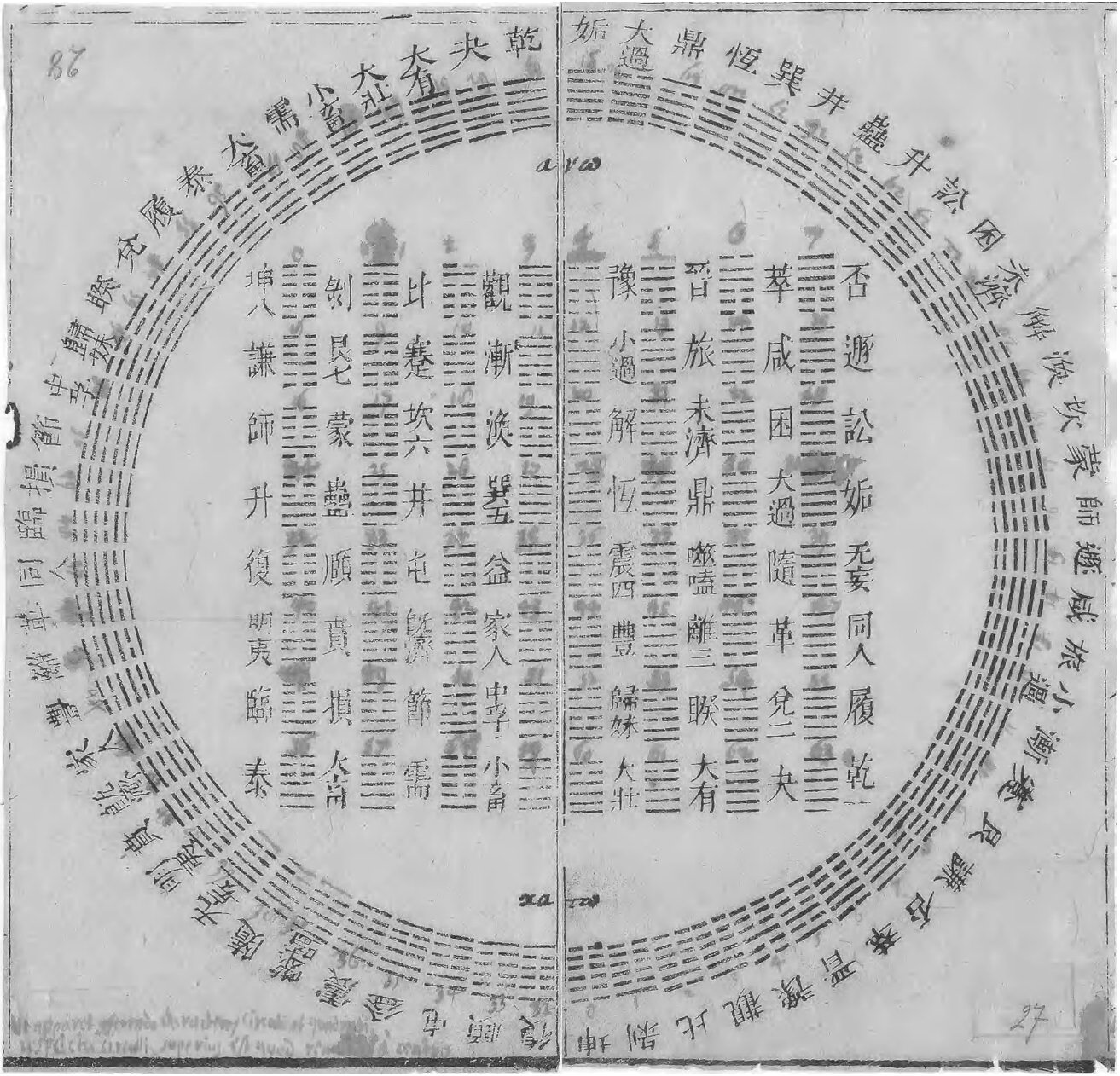
Traditional I Ching hexagram circle diagram
The text

One of the oldest texts in the Chinese tradition.

The I Ching, or Book of Changes, has its roots in early Zhou dynasty divination, where hexagrams were used not simply to predict outcomes, but to read the shape of a situation: its tensions, its timing, its hidden movement, and the direction in which it was tending. Over the centuries, the text came to be read not only as an oracle, but as a work of philosophy, cosmology, and practical reflection.

The idea

Change is not chaos.

Life shifts by pattern. Circumstances ripen, reverse, collide, harmonize, exhaust themselves, and begin again. The I Ching gives form to this insight through sixty-four hexagrams, each made of six lines. These figures do not reduce life to fixed answers; they offer a way of seeing relationship, momentum, and possibility more clearly.

The practice

Discernment, not fortune-telling.

A cast does not stand outside life like a verdict delivered from nowhere. It begins with a question. It asks what forces are present, what is shifting, what is stable, and what kind of response the moment calls for. The tradition is less about fortune-telling than about discernment — learning to recognize the pattern within uncertainty. This emphasis on change, human limitation, and thoughtful response is central to major philosophical readings of the Yijing.

The endurance

Why it has lasted three thousand years.

The I Ching speaks to moments when life is unsettled: a decision not yet ripe, a relationship in motion, an effort meeting resistance, a path that feels possible but unclear. Its language is ancient, but its subject is timeless: how to move well within change. Han-era scholars elevated the text into the Confucian canon, and later commentators across traditions continued to read it as both a book of wisdom and a guide to judgment.

Our approach

易經 Oracle is a contemporary doorway into that tradition.

We use a simple three-coin ritual to cast a hexagram, then interpret it in clear modern language while staying faithful to the spirit of the source: attentive to pattern, alert to timing, and grounded in reflection rather than superstition. The aim is not to replace your judgment, but to deepen it — to help you pause, see the situation more fully, and meet it with greater clarity.

Have a question in mind?

Cast your own coins, enter the result, and get a full hexagram interpretation.

Cast a reading →