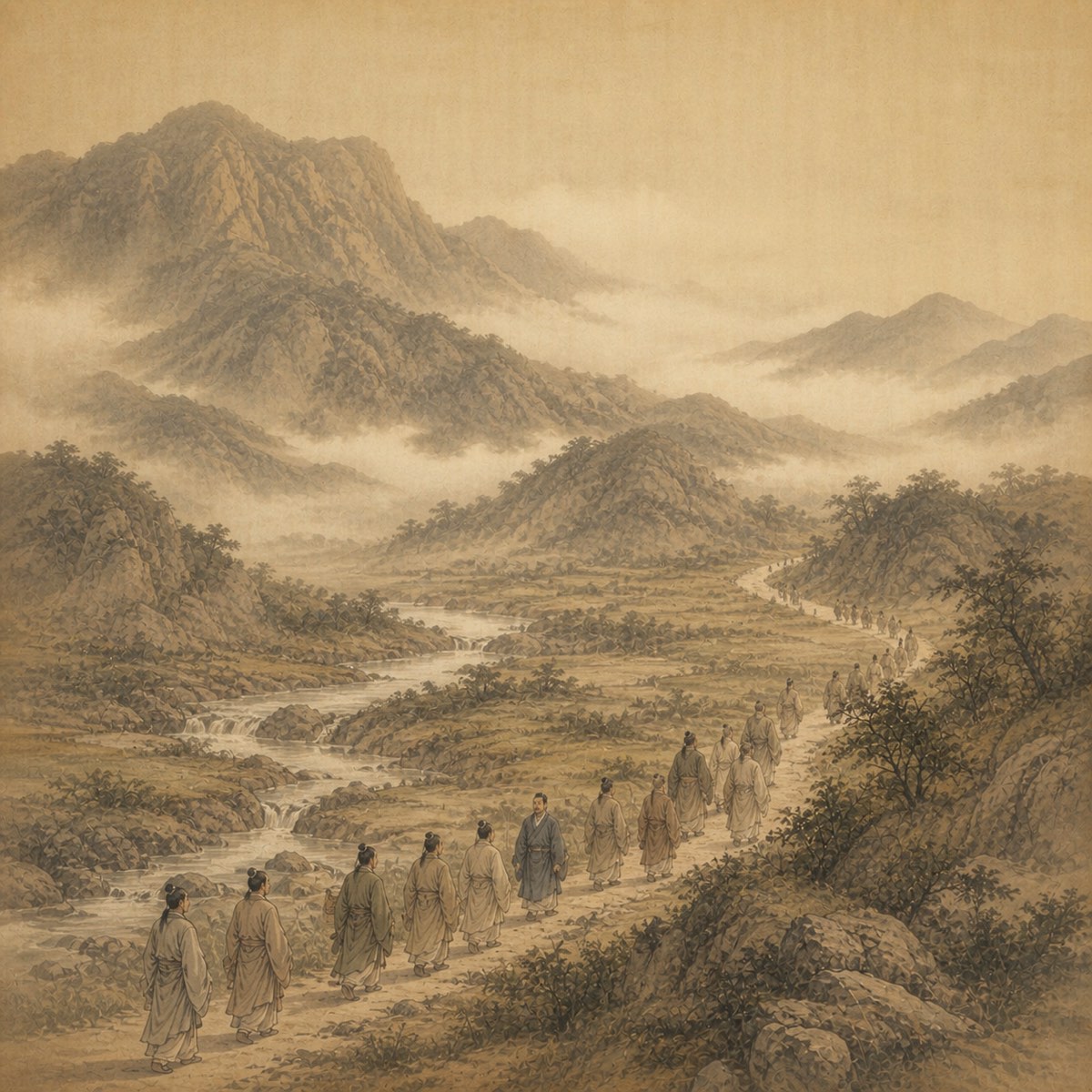
An orderly procession crossing a broad landscape — visual meditation on Hexagram 7, The Army.
Hexagram 07 · The Army · 地水师

Shī

The Army

Hexagram 7, The Army (师卦, Shī), appears when a difficult situation requires people, effort, or competing impulses to be organized around one clear purpose. Its military imagery is not a command to fight. It emphasizes discipline, legitimate leadership, and restraint when the stakes are high. Choose an experienced leader, establish rules before acting, and do not mobilize more force than the situation justifies. Success depends less on aggression than on order, responsibility, and knowing when to withdraw.

The Essence

What does Hexagram 7 mean?

Hexagram 7 is called Shī (师) in Chinese, here meaning an army or organized multitude. In the I Ching, it is formed by earth above water. The lower trigram Kǎn represents water and danger; the upper trigram Kūn represents receptive earth. Water held beneath the ground suggests strength gathered within an ordinary population: a collective capacity that must be contained, supplied, and directed.

The classical Judgment is brief: perseverance is required; an experienced person brings good fortune and no blame. The emphasis falls on who leads and how. A large group without discipline can multiply confusion, while capable leadership turns separate efforts into coordinated action.

The Army often appears when:

  • a problem is too large for improvised individual effort,
  • a team needs roles, standards, and a shared objective,
  • strong feelings must be brought under conscious direction,
  • or action is necessary but carries consequences for other people.

Shī does not glorify conflict. Its lines show disorder, casualties, justified retreat, the choice of the right commander, and the danger of rewarding unfit people after victory. The question is not simply whether you can prevail, but whether the whole undertaking is disciplined, proportionate, and worth its cost.

The core meaning of The Army

At its core, Hexagram 7 describes organized strength under responsible command. Five yielding lines surround one firm line in the second position. That central yang line acts as the field commander: strong enough to lead, but placed within the group rather than above it. Authority is effective because it remains close to the work and answers to a larger purpose.

The Image says that water is present within the earth, and the noble person embraces the people and nurtures the multitude. Before a group can act, it must be sustained. Logistics, trust, training, clear communication, and care for those carrying the burden are not secondary concerns; they are the foundation of disciplined action.

The Army therefore asks for structure before mobilization. Define the objective. Establish lawful limits. Put the most capable person in charge. Make room for correction and retreat. Whether the “army” is a workplace, a household, a community, or your own divided attention, force without order creates damage that determination alone cannot repair.

A Note on Reception

What it feels like to receive Hexagram 7

Receiving Hexagram 7 can feel like realizing that goodwill is no longer enough. The situation may involve too many people, too much pressure, or too many moving parts to manage through spontaneous agreement. Someone must set priorities, assign responsibility, and hold the line when confusion spreads.

That can be uncomfortable, especially if you dislike authority or fear becoming controlling. The hexagram distinguishes command from domination. Sound command is accountable to the purpose, protects the group from unnecessary harm, and accepts that withdrawal can be wiser than display.

You may also experience The Army inwardly. Anxiety, anger, ambition, and duty can pull in different directions like an undisciplined crowd. The reading asks which principle is qualified to lead. If fear becomes the commander, every uncertainty looks like an enemy. If pride leads, winning can matter more than the original need. An experienced inner leader is steadier: it names the objective, uses only the force required, and keeps the larger life intact while addressing the present danger.

Contextual Interpretations

Hexagram 7 in different areas of life

Love & Relationships

In love, Hexagram 7 often means that a relationship problem needs clear boundaries and coordinated effort. The issue may involve family pressure, distance, parenting, recurring conflict, or a practical crisis that cannot be solved by affection alone. In a love reading, it asks whether both people are working toward the same objective.

Avoid turning your partner into the enemy. Military imagery can tempt a person to build a case, recruit allies, or treat compromise as defeat. That is usually a misuse of the hexagram. The real task is to organize the response to the problem: agree on what must be protected, who is responsible for what, and which conduct is unacceptable.

If only one person is carrying the plan, resentment will grow. If authority is being used to intimidate or control, outside support and safety matter more than preserving appearances. The Army can support firm action, but only when leadership is legitimate and proportionate. A strong relationship under this hexagram behaves less like opposing camps and more like a disciplined team facing a shared difficulty.

Career & Work

In career, Hexagram 7 points to leadership, execution, and the discipline required to coordinate a group under pressure. A project may need a clear owner, a realistic chain of responsibility, or stronger operating standards. In a career reading, it often favors experienced leadership over charisma or improvisation.

Make the objective concrete enough that people know what success and restraint look like. Clarify decision rights, timelines, resources, and escalation paths before urgency turns every question into a command. The second line suggests that the strongest leader remains in the middle of the work and earns trust through competence. The fifth warns against giving command to someone who is not ready to carry it.

This hexagram can support taking charge, but it does not promise that every campaign should proceed. A strategic pause or retreat may preserve the team and improve the position. After a success, distribute responsibility carefully. Promoting people who cannot carry authority can undo what disciplined effort achieved.

Money & Resources

Financially, Hexagram 7 favors planning, reserves, and disciplined allocation when resources must serve a demanding objective. This can arise around debt repayment, a business runway, legal costs, household budgeting, or any situation where scattered spending weakens a necessary plan.

In a money reading, decide what the funds are being mobilized to accomplish. Set limits in advance, keep records, and give financial authority to someone qualified and accountable. A large commitment made without rules resembles an army leaving camp without discipline: even a reasonable goal can produce avoidable loss.

The hexagram is especially cautious about escalation. Do not keep adding money merely because you have already committed resources or want to prove the original decision was right. Review whether the campaign remains justified and whether retreat would reduce harm. If others are affected, include their wellbeing in the calculation. The Army treats provisioning as part of leadership; a plan that exhausts the people supporting it is not well led.

Is Hexagram 7 a Yes or No?

Hexagram 7 is a conditional yes to organized, necessary action — not to impulsive force. Proceed only if the purpose is legitimate, the leadership is capable, and the rules are clear.

For questions about assembling support, creating structure, or responding firmly to a real problem, it can lean yes. For acting alone, escalating from pride, or moving without preparation, it leans no. The changing lines show whether discipline is established, leadership is sound, retreat is appropriate, or the group is being put at risk by the wrong person.

The Six Moving Stages

The six changing lines

The six changing lines of Hexagram 7 follow a campaign from departure to its aftermath. The first demands rules before the army moves. The second places capable leadership within the ranks and receives repeated trust. The third shows the disastrous burden of defeat and casualties. The fourth permits an orderly retreat without blame. The fifth distinguishes a concrete reason to act from the danger of appointing the wrong commander. The sixth turns to settlement and warns that people of poor character must not be given authority. Together, the lines judge organization and leadership more strictly than boldness.

01

Setting Out with Discipline

Bottom line

初六:师出以律,否臧凶。

Establish rules before mobilizing; disorder at the beginning brings misfortune.

02

Leading from the Center

Line 2

九二:在师中,吉无咎,王三锡命。

Capable leadership within the group earns trust, recognition, and good fortune.

03

Carrying Corpses

Line 3

六三:师或舆尸,凶。

The army carries corpses: a warning of disastrous loss and failed action.

04

Orderly Retreat

Line 4

六四:师左次,无咎。

Withdraw to a sound position; strategic restraint carries no blame.

05

Choosing the Commander

Line 5

六五:田有禽,利执言,无咎。长子帅师,弟子舆尸,贞凶。

Act for a concrete reason; entrust command to the capable, since wrong appointments bring loss.

06

Reward after Victory

Top line

上六:大君有命,开国承家,小人勿用。

Establish the new order, but do not give authority to the unfit.

Learn more about how changing lines reshape a reading in I Ching Changing Lines.

Reflection

What this asks of you

If you receive Hexagram 7, do not begin with force. Begin by deciding what truly needs to be organized and who is fit to carry responsibility.

  1. 01 /

    What exact purpose justifies asking people or resources to mobilize?

  2. 02 /

    Who has the experience, trust, and restraint required to lead?

  3. 03 /

    What rule or limit would prevent necessary action from becoming needless harm?

Gather strength, give it structure, and keep it answerable to the purpose. Discipline is what keeps power from becoming waste.

Common Misunderstandings

What Hexagram 7 is not

“The Army means I should fight.”

Not necessarily. Its central concern is disciplined collective action. Sometimes that means firm intervention; sometimes it means organizing support, containing danger, or retreating without blame.

Before escalating, ask whether clearer terms, better preparation, or a capable mediator could meet the need with less harm. Necessary strength is not the same as maximum force.

“Strong leadership means one person controls everything.”

No. The effective commander stands within the group, receives a legitimate mandate, and remains accountable for the consequences. Authority without competence or care is one of the hexagram's clearest dangers.

A title may authorize decisions, but it does not prove mature judgment. The “experienced person” is recognized by steadiness, practical knowledge, and the restraint to change course when the facts require it.

“If the cause is right, the cost does not matter.”

The lines repeatedly reject that idea. They show corpses, bad appointments, and the importance of withdrawal. The inverse, Hexagram 8, Holding Together, asks what creates willing allegiance once people are no longer organized mainly by danger or command.

Related Patterns

Hexagrams related to Hexagram 7

Frequently Asked Questions

Is Hexagram 7 a good sign?

Hexagram 7 can be favorable when action is necessary and well led. Its Judgment promises good fortune and no blame through perseverance under an experienced person. Without discipline, legitimate purpose, and capable leadership, the same collective force can produce confusion and loss.

What does Hexagram 7 mean in love?

In love, Hexagram 7 suggests that a shared problem needs boundaries, roles, and coordinated effort. It does not advise treating a partner as an opponent. The healthiest expression is two people organizing around what they need to protect or repair, with neither person using authority to dominate the other.

Is Hexagram 7 a yes or no hexagram?

It is a conditional yes to disciplined and justified action. It leans no when the plan is impulsive, the leadership is unqualified, or the real motive is pride or retaliation. Preparation and responsibility determine the answer more than confidence does.

What does Hexagram 7 mean with changing lines?

Its changing lines describe the stages and risks of organized action. They begin with rules, identify centered leadership, warn of disastrous losses, permit retreat, insist on choosing the right leader, and end by asking who should receive authority after success.

What is the Chinese name of Hexagram 7?

The Chinese name is Shī (师), here meaning an army, troops, or an organized multitude. Its full name is 地水师, earth over water. The Image describes water held within the earth, suggesting a collective strength that must be nurtured and organized.

Does Hexagram 7 predict conflict or war?

No. The hexagram uses military imagery to examine leadership, discipline, and collective action under pressure. In a modern reading, the “army” may be a team, family, organization, campaign, or your own competing impulses. It describes the need for order; it does not predict literal warfare.

See Hexagram 7 in a reading of your own

Cast your own coins, enter the result, and receive a reading of the pattern in front of you — including any changing lines and the resulting hexagram.

Cast a reading →
← Back to all 64 hexagrams