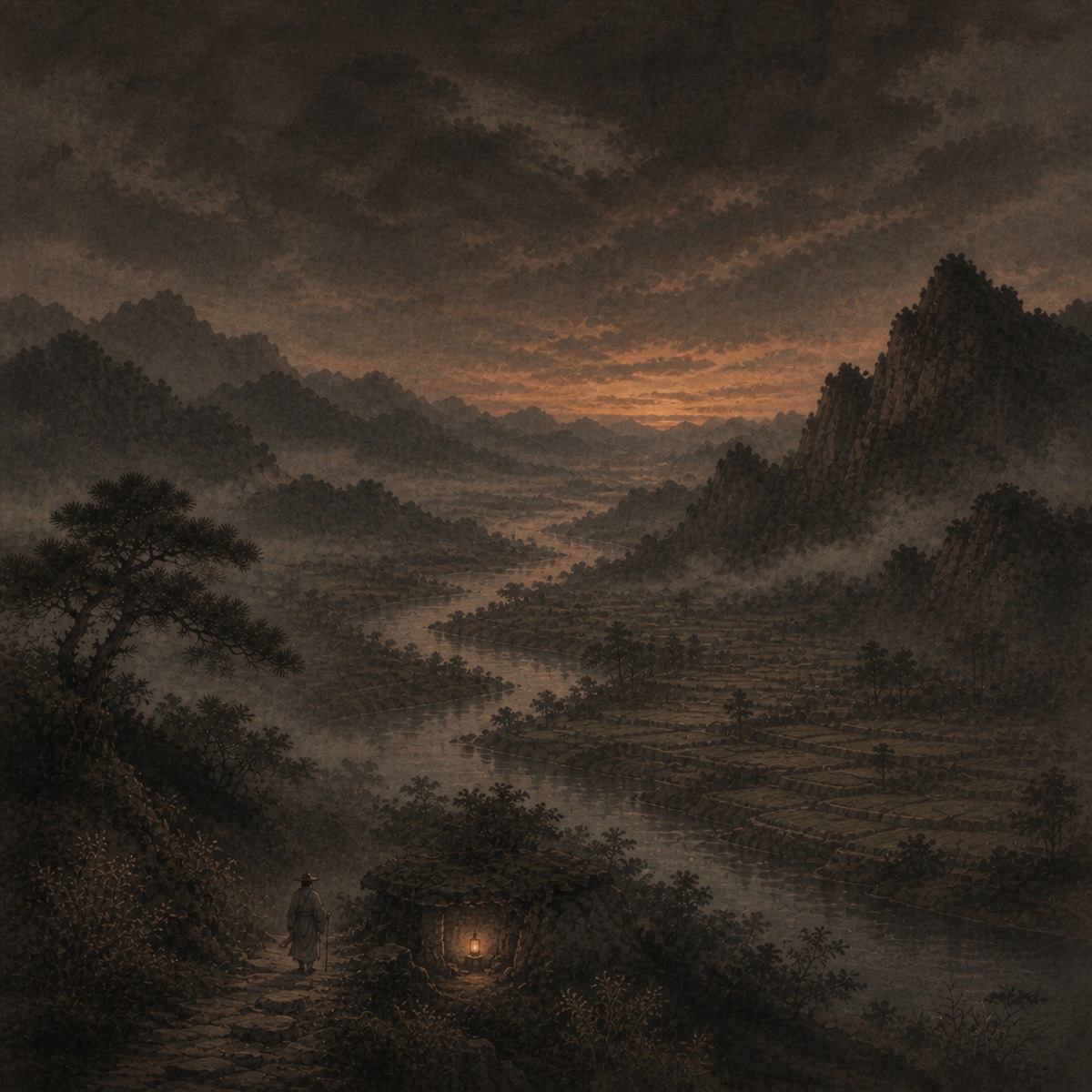
A sheltered light at dusk — visual meditation on Hexagram 36, Darkening of the Light.
Hexagram 36 · Darkening of the Light · 地火明夷

明夷 Míng yí

Darkening of the Light

Hexagram 36, Darkening of the Light (明夷卦, Míng Yí), is the image of brightness entering beneath the earth. It appears when clarity, integrity, or talent cannot be shown openly without meeting resistance or harm. The counsel is not to abandon your light, but to protect it: remain inwardly clear while becoming more measured about what you reveal, to whom, and when. This is strategic reserve rather than defeat. Preserve what is true until the environment can receive it more safely.

The Essence

What does Hexagram 36 mean?

Hexagram 36 is called Míng Yí (明夷) in Chinese, commonly translated as Darkening of the Light, Brightness Wounded, or Injury to the Light. In the I Ching, it is formed by earth above fire. The bright trigram Lí lies beneath receptive Kūn, like the sun passing below the horizon and its light no longer visible at the surface.

The light is not extinguished. It is hidden.

This distinction defines the hexagram. Míng Yí often describes an environment in which openness is unsafe, good judgment is ignored, or people in power cannot tolerate what is clear and true. Under such conditions, displaying every insight may invite needless conflict or injury. The classical judgment gives spare counsel: perseverance in difficulty is favorable.

Darkening of the Light often appears when:

  • your real position must be protected rather than fully disclosed,
  • a difficult environment rewards conformity and punishes candor,
  • integrity must be maintained without dramatic confrontation,
  • or a period of reduced visibility is necessary for survival and recovery.

The hexagram does not ask you to become false. It asks you to separate inner truth from outer display and preserve the first when the second would be dangerous.

The core meaning of Darkening of the Light

At its core, Hexagram 36 describes the protection of clarity under unreceptive conditions. The Image advises the noble person, while governing others, to use darkness and yet remain bright. This means softening outward display without allowing inward discernment to become confused.

There is an ethical tension here. Concealment can look like fear, compromise, or dishonesty. Míng Yí distinguishes strategic reserve from surrender. You may speak less, reveal plans selectively, lower your profile, or comply with what is harmless while refusing inwardly to call falsehood true. The purpose is to keep the light intact until effective action becomes possible.

The fifth line explicitly invokes Jizi (箕子), traditionally remembered as a virtuous figure who preserved integrity under a corrupt ruler. The model is not theatrical martyrdom. It is survival without inner capitulation. When the environment is dark, wisdom may consist of staying lucid, protecting vulnerable people and work, and refusing to spend truth in gestures that cannot help.
A Note on Reception

What it feels like to receive Hexagram 36

Receiving Hexagram 36 can feel lonely. You may see something clearly while the surrounding environment denies it, or know that speaking with complete openness would make your position more vulnerable rather than improve the situation. Recognition recedes. The safest expression of yourself becomes smaller than the truth you carry.

The reading validates the difficulty without romanticizing silence. Being misunderstood, overlooked, or forced to guard your words can be painful. It can also produce self-doubt: if nobody around you acknowledges what you see, you may begin to question your own perception.

Míng Yí asks you to protect the conditions that keep discernment alive. Maintain contact with trustworthy people. Record what matters. Keep private practices that return you to your own standards. Distinguish what must be said now from what can wait, and what must be acted upon from what would only expose you needlessly.

This is not a permanent identity. The sun below the earth belongs to a cycle. Darkness changes; the task is to emerge from it with your capacity for light still whole.

Contextual Interpretations

Hexagram 36 in different areas of life

Love & Relationships

In love, Hexagram 36 often describes feelings or truths that do not yet feel safe to express openly. One person may be guarded because of past hurt, a relationship may be constrained by outside circumstances, or honest communication may repeatedly meet defensiveness rather than care. In a love reading, the hexagram asks first whether emotional openness is being protected or suppressed.

Strategic reserve can be wise when trust is still developing. You do not owe immediate vulnerability to someone who has not shown they can receive it responsibly. Move slowly, notice how disclosures are handled, and keep clear boundaries around what is tender.

But concealment should not become the permanent structure of intimacy. A relationship in which you must continually hide your judgment, needs, or identity to avoid punishment is not simply going through a quiet phase. Míng Yí does not tell you to endure harm indefinitely. It asks you to preserve your inner truth and choose the safest effective response — which may include seeking support, changing the conditions, or leaving when openness remains unsafe.

Career & Work

In career, Hexagram 36 often appears in a workplace where visibility carries risk. Leadership may be unreceptive, politics may punish candor, or good work may need protection from people who would obstruct, appropriate, or misuse it. This is not the moment for indiscriminate transparency. In a career reading, careful timing and selective disclosure can matter more than public credit.

Keep your analysis clear while making your outward approach measured. Document decisions, protect sensitive work, build quiet alliances, and learn who can be trusted with unfinished plans. If direct criticism would only provoke retaliation, choose channels and language that preserve both the message and your position.

Darkening of the Light is not an argument for making yourself small forever. It is a survival strategy for a difficult phase. Use reduced visibility to prepare: strengthen skills, preserve evidence, understand the power structure, and develop options. If the environment consistently requires you to betray your standards, the longer-term task may be to find a place where your judgment can operate in daylight.

Money & Resources

Financially, Hexagram 36 favors protection, discretion, and the preservation of essentials. Conditions may be uncertain, information may be incomplete, or revealing your full position could weaken your leverage. This is usually not a time for conspicuous spending, public risk-taking, or decisions made to prove confidence.

In a money reading, keep plans modest and information on a need-to-know basis. Preserve liquidity, review exposure, secure records, and be cautious around opportunities that depend on secrecy you do not control. Quiet preparation is more useful than projecting prosperity.

The hexagram does not predict financial loss. It describes a pattern in which protection matters more than display. If income or security depends on a difficult institution or relationship, work toward alternatives without advertising every step. Maintain honest records and clear internal limits even when the outer environment is confusing. The goal is to pass through constrained conditions without sacrificing the resources or judgment needed for a more open future.

Is Hexagram 36 a Yes or No?

Hexagram 36 usually leans toward “not openly” or “not now” rather than a simple yes. The situation may contain real value, but the present environment does not support full exposure, direct confrontation, or confident expansion.

If the question concerns whether to reveal, announce, challenge, or push for recognition, the answer is cautious. Protect the essential truth and wait for a safer opening. If the question concerns whether to preserve, prepare privately, or remain inwardly faithful under pressure, the answer can be yes. The key is not passivity; it is choosing the form of action least likely to damage what must survive.

The Six Moving Stages

The six changing lines

The six changing lines of Hexagram 36 trace different responses to injured or concealed light. The first line withdraws despite hardship. The second is wounded but finds strong help. The third reaches the leading source of the darkness while warning against haste. The fourth gains access to the inner workings of the situation and then leaves. The fifth preserves integrity through deliberate concealment. The sixth shows darkness at its extreme: what once rose high falls back into the earth. The lines help distinguish retreat, rescue, investigation, endurance, and the eventual collapse of obscuring power.

01

The Wounded Wing

Bottom line

初九:明夷于飞,垂其翼。君子于行,三日不食,有攸往,主人有言。

Withdraw despite hardship; reduced visibility protects the journey.

02

Injury to the Left Thigh

Line 2

六二:明夷,夷于左股,用拯马壮,吉。

Accept strong assistance and move out of danger.

03

The Southern Hunt

Line 3

九三:明夷于南狩,得其大首,不可疾贞。

Reach the leading source of the problem, but do not rush what follows.

04

Entering the Left Belly

Line 4

六四:入于左腹,获明夷之心,出于门庭。

Gain access to the inner reality of the situation, then leave it behind.

05

The Darkening of Jizi

Line 5

六五:箕子之明夷,利贞。

Conceal outward brilliance while preserving inward integrity.

06

From Heaven into Earth

Top line

上六:不明晦,初登于天,后入于地。

What rose to great height loses its guiding principle and falls back to earth.

Learn more about how changing lines reshape a reading in I Ching Changing Lines.

Reflection

What this asks of you

If you receive Hexagram 36, protect clarity before trying to display it. Let three questions help you distinguish wise reserve from fearful retreat.

  1. 01 /

    What truth, capacity, or vulnerable part of you needs protection right now?

  2. 02 /

    Who has actually earned access to what you know or plan?

  3. 03 /

    What quiet preparation would preserve your options until conditions become more receptive?

Darkness does not require you to extinguish the light. Keep it clear, sheltered, and alive until it can guide effective action again.

Common Misunderstandings

What Hexagram 36 is not

“Hexagram 36 means I should hide who I am.”

Not exactly. It advises protecting what is true when open display would invite harm or accomplish nothing. Strategic reserve is temporary and purposeful; self-erasure is not.

“Staying quiet means agreeing with what is wrong.”

No. The hexagram separates inner clarity from outer expression. You can refuse inward capitulation while choosing a safer time, channel, or form for action. Silence can preserve agency when speech would only hand power to an unreceptive audience.

“Darkening of the Light predicts that everything will get worse.”

It describes difficult conditions, not an unchangeable future. The inverse, Hexagram 35, Progress, places the same fire above the earth, where light becomes visible and welcomed. Together the pair shows that concealment and recognition belong to changing circumstances. The present task is to preserve clarity so it remains available when the conditions turn. That preservation is active preparation, not passive resignation.

Related Patterns

Hexagrams related to Hexagram 36

Frequently Asked Questions

Is Hexagram 36 a bad sign?

It describes difficult or unreceptive conditions, but it is not a prediction of inevitable harm. Hexagram 36 offers a survival strategy: protect your clarity, reduce unnecessary exposure, and persevere without abandoning your standards. Its value lies in recognizing that openness is not equally safe or useful in every environment, and that careful reserve can preserve future choices.

What does Hexagram 36 mean in love?

In love, Hexagram 36 often points to guarded feelings, incomplete trust, or a situation in which full honesty does not yet feel safe. It supports careful boundaries and gradual disclosure. If a relationship continually requires you to hide your needs or identity to avoid punishment, the hexagram favors protecting yourself and seeking a safer arrangement rather than enduring indefinitely.

Is Hexagram 36 a yes or no hexagram?

It usually leans toward “not now” or “not openly.” Actions involving publicity, confrontation, or exposure are less favored under the present conditions. Quiet preparation, preservation, and selective disclosure may receive a more positive answer. The changing lines show whether withdrawal, help, investigation, or carefully timed action is most relevant, so the answer depends strongly on the proposed form of action.

What does Hexagram 36 mean with changing lines?

The changing lines show different ways of protecting light under pressure: withdrawing, accepting rescue, confronting the source of harm, understanding and leaving a compromised situation, or concealing wisdom without losing it. The sixth line shows what rose high losing its proper measure and falling back to earth. The resulting hexagram reveals the broader pattern developing from that response.

What is the Chinese name of Hexagram 36?

The Chinese name is Míng Yí (明夷). Míng means brightness or light, while Yí is traditionally read here with the sense of injury or wounding. The name is commonly translated as Darkening of the Light or Brightness Wounded. Its full form is 地火明夷, earth over fire, an image of brightness concealed below the surface rather than destroyed.

Does Hexagram 36 mean I should stay silent?

Not in every circumstance. It advises judging the likely effect and cost of disclosure. Silence, selective speech, documentation, indirect action, or seeking trusted support may be wiser than direct confrontation in a hostile environment. The purpose is to preserve truth and agency, not to deny what you know or accept harmful conditions forever.

See Hexagram 36 in a reading of your own

Cast your own coins, enter the result, and receive a reading of the pattern in front of you — including any changing lines and the resulting hexagram.

Cast a reading →
← Back to all 64 hexagrams