01
What the I Ching Is
STRUCTURAL · SITUATIONAL · BINARY
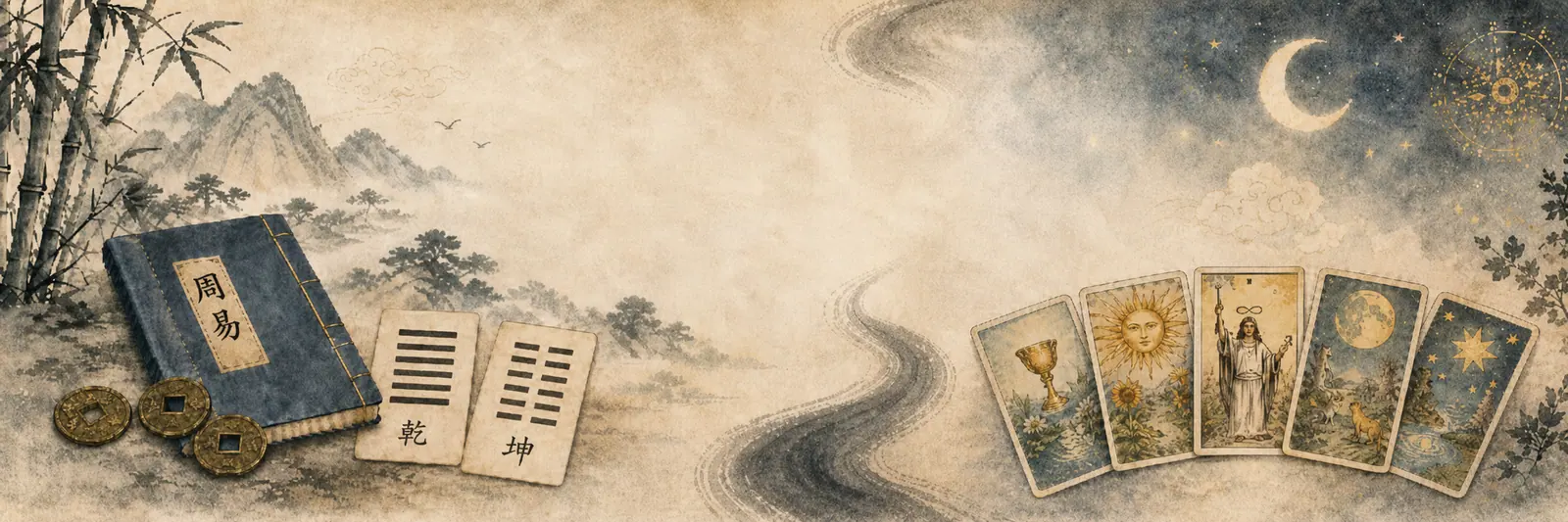
The I Ching, or Book of Changes, is an ancient Chinese system built around 64 hexagrams.
A hexagram is a figure made of six broken or solid lines. Traditionally, you generate one by casting yarrow stalks or, more commonly today, by tossing three coins six times.
The result is not a card image but a structured pattern.
That pattern is then read as a description of the situation: its condition, its tensions, its direction of movement, and the kind of response it calls for. If changing lines appear, they may produce a second hexagram, adding another layer to the reading.
Where Tarot gives you images, the I Ching gives you structure. If you are new to the system itself, start with What Is the I Ching?
A hexagram is a figure made of six broken or solid lines. Traditionally, you generate one by casting yarrow stalks or, more commonly today, by tossing three coins six times.
The result is not a card image but a structured pattern.
That pattern is then read as a description of the situation: its condition, its tensions, its direction of movement, and the kind of response it calls for. If changing lines appear, they may produce a second hexagram, adding another layer to the reading.
Where Tarot gives you images, the I Ching gives you structure. If you are new to the system itself, start with What Is the I Ching?